Cable Cat
A versatile multi-protocol cable for hardware development | 2025
About
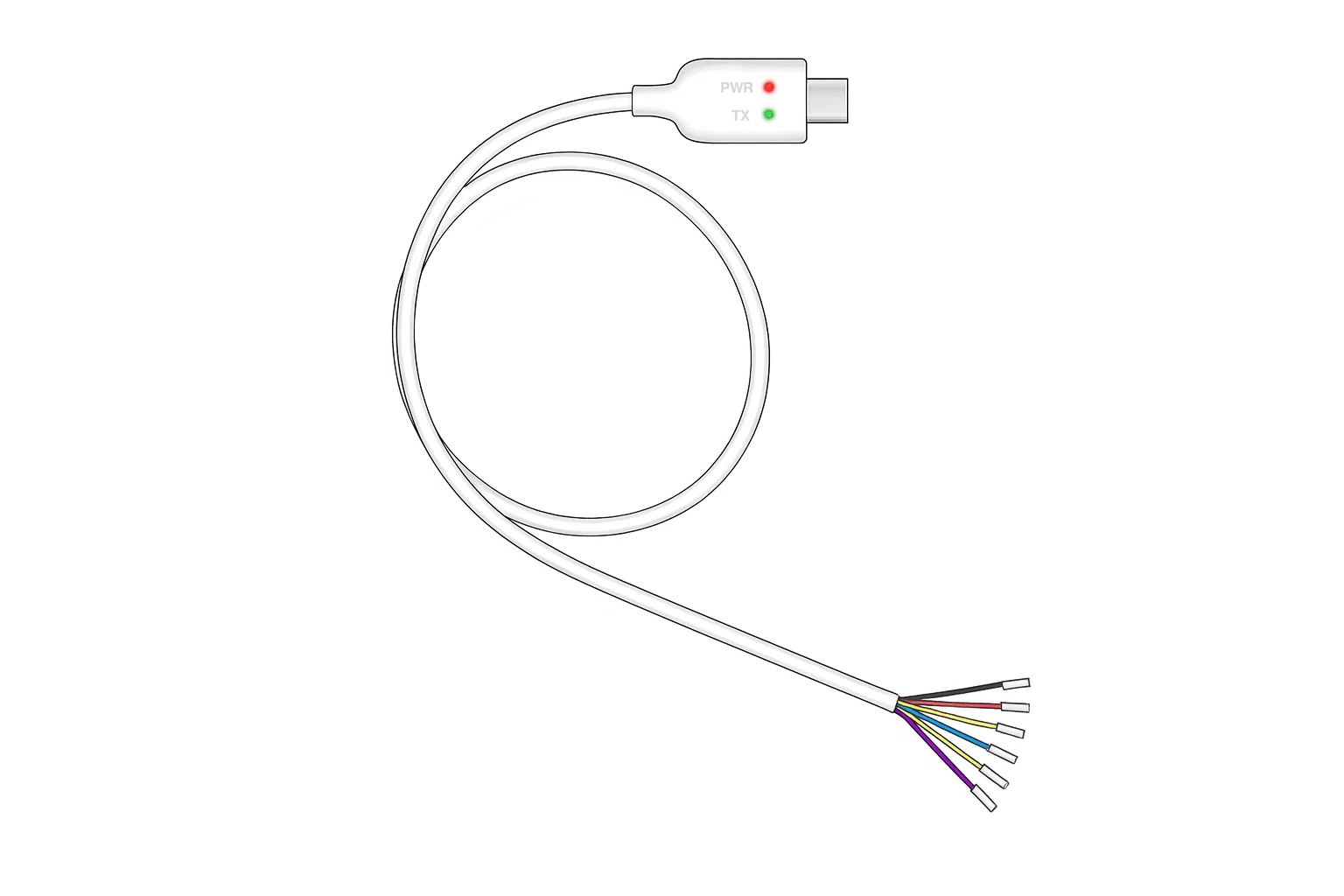
Cable Cat is a Swiss Army knife for hardware interfaces, integrating UART, SPI, and I2C protocols into a single cable. Built on a custom BaoChip microcontroller, it delivers the multi-protocol functionality of tools like Bus Pirate and Tigard but in a simple, portable cable form factor—no breakout boards required.
Design Concept
Rather than juggling multiple adapters and breakout boards, Cable Cat provides direct device connections with broader protocol support than traditional FTDI cables. The design embraces simplicity: plug it in, and an interactive REPL welcomes you to configure it for whatever your project needs.
Features
Cable Cat transforms hardware prototyping and debugging with:
- Multi-protocol support: UART, SPI, and I2C in one cable
- Interactive configuration: Built-in REPL for easy device programming and testing
- Visual feedback: Integrated TX (green), Power (red), and Mode LEDs
- Cross-platform support: Rust library with Python bindings for Mac, Linux, and Windows
- Portable form factor: 1-meter USB-C cable with 8 Dupont connectors
Connect an I2C temperature sensor to your Mac and read from it interactively. Emulate a slave flash memory device. Program microcontrollers. Cable Cat adapts to your workflow.
Technical Specifications
Hardware:
- USB-C host connector with 1m cable
- 8 Dupont connectors for device interfacing
- 3.3V operation (with planned 1.8V and 5V support)
- Integrated status LEDs in cable housing
Protocols:
- UART with configurable baud rates, framing, and hardware flow control
- SPI with master/slave modes and chip select control
- I2C with master/slave operation at standard speeds
Software:
- Cross-platform Rust library built on libusb
- Python bindings for scripting
- Command-line REPL similar to i2cdetect and bus sniffers